Lab Crawl 2026
When I was in the final year of my undergrad at UCSD in 2023 I was Biomedical Engineering Society (BMES) Outreach Chair. As part of the role, I organized the first annual Lab Crawl where local high school students are invited to campus to tour through different research laboratories while graduate students and academics explain their research. It was a wildly successful and rewarding event, so I have continued holding it annually. In February, I hosted the 4th annual Lab Crawl, here is how it went:
First, we received the ~100 high school students, organized them into 10 groups, and assigned each group to an undergraduate liaison to guide them from lab to lab. Then, each group was led by their liaison to their first lab rotation. I was bouncing between groups/labs to make sure everything ran smoothly, but was able to grab pictures of the students in some of the labs (with their permission).
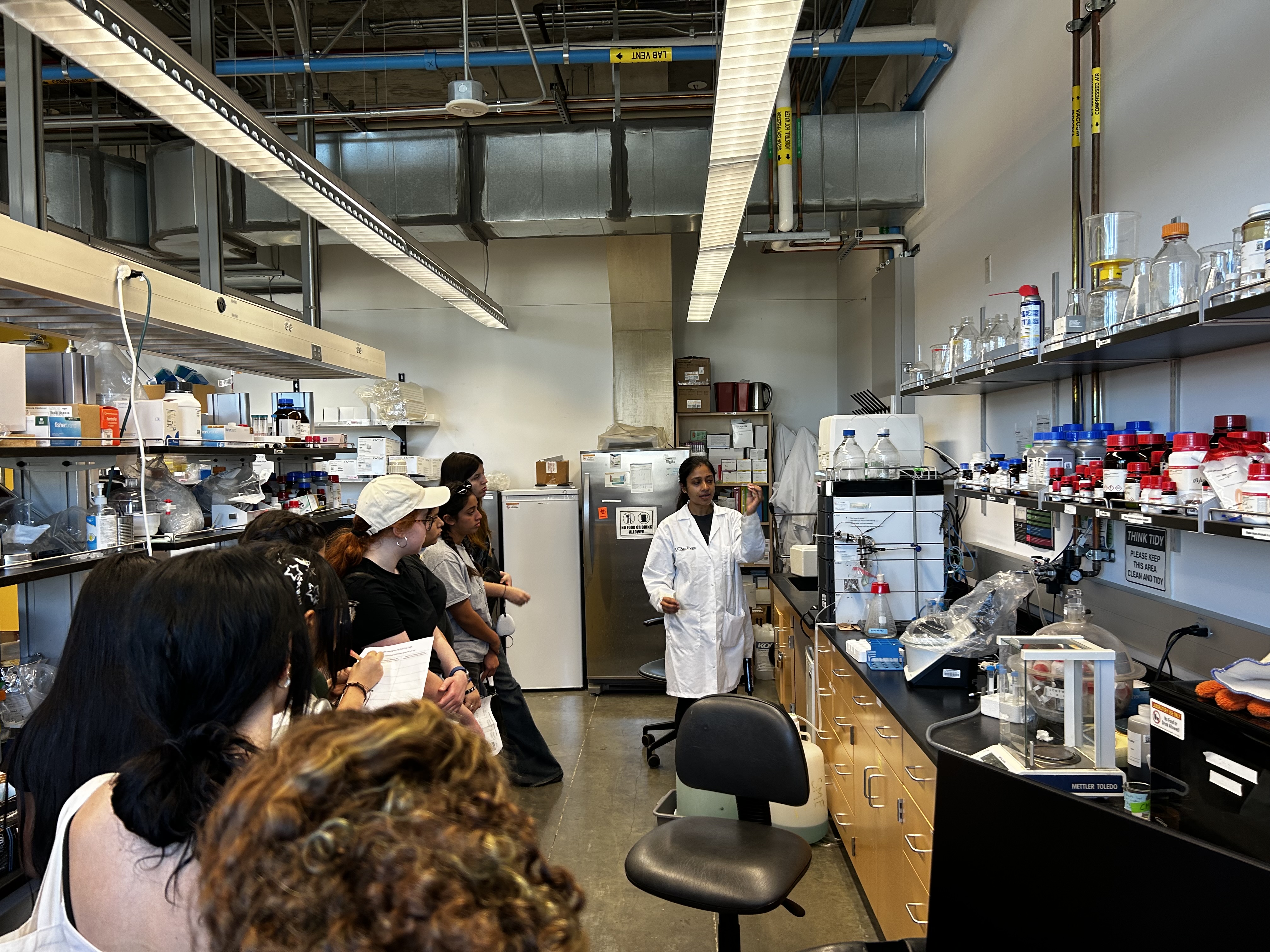
First stop was at the Jokerst Lab, which focuses on using ultrasound and photoacoustic imaging to improve human health. Moumita, a postdoc in the lab, showed the students how liquid chromatography works and how it helps them conduct their research. Throwing around terms like liquid chromatography to high school students and having them understand it is a big ask, but Moumita did a great job showcasing her lab’s research and equipment.
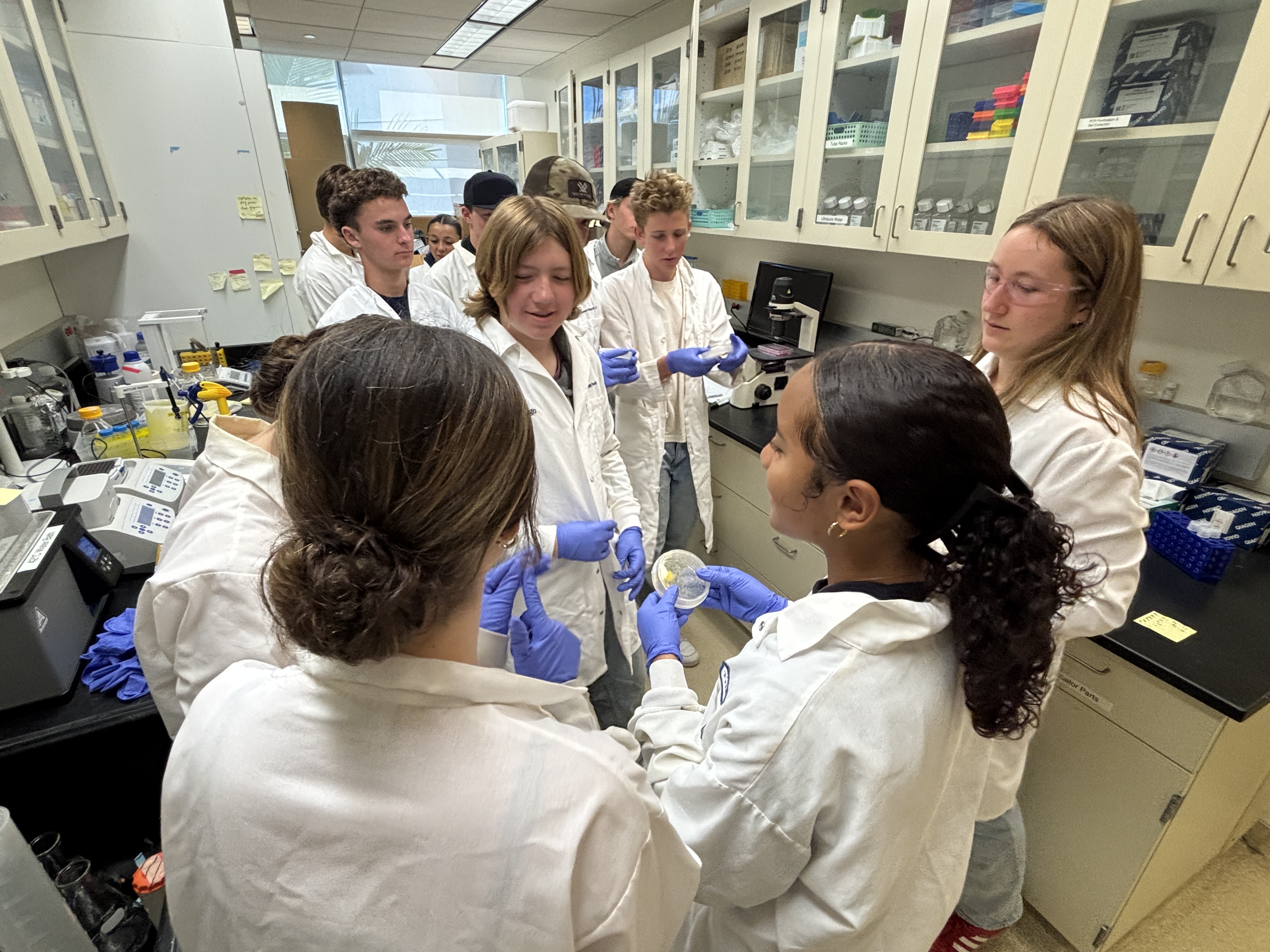
Next, we all packed into an elevator to stop by the Mali lab, where students learned about synthetic biology and the lab’s efforts to develop molecular toolsets for genome, transcriptome, and proteome engineering from masters student Laura. They then spread BSL-1 bacteria onto a Petri dish in full lab gear, like real scientists!
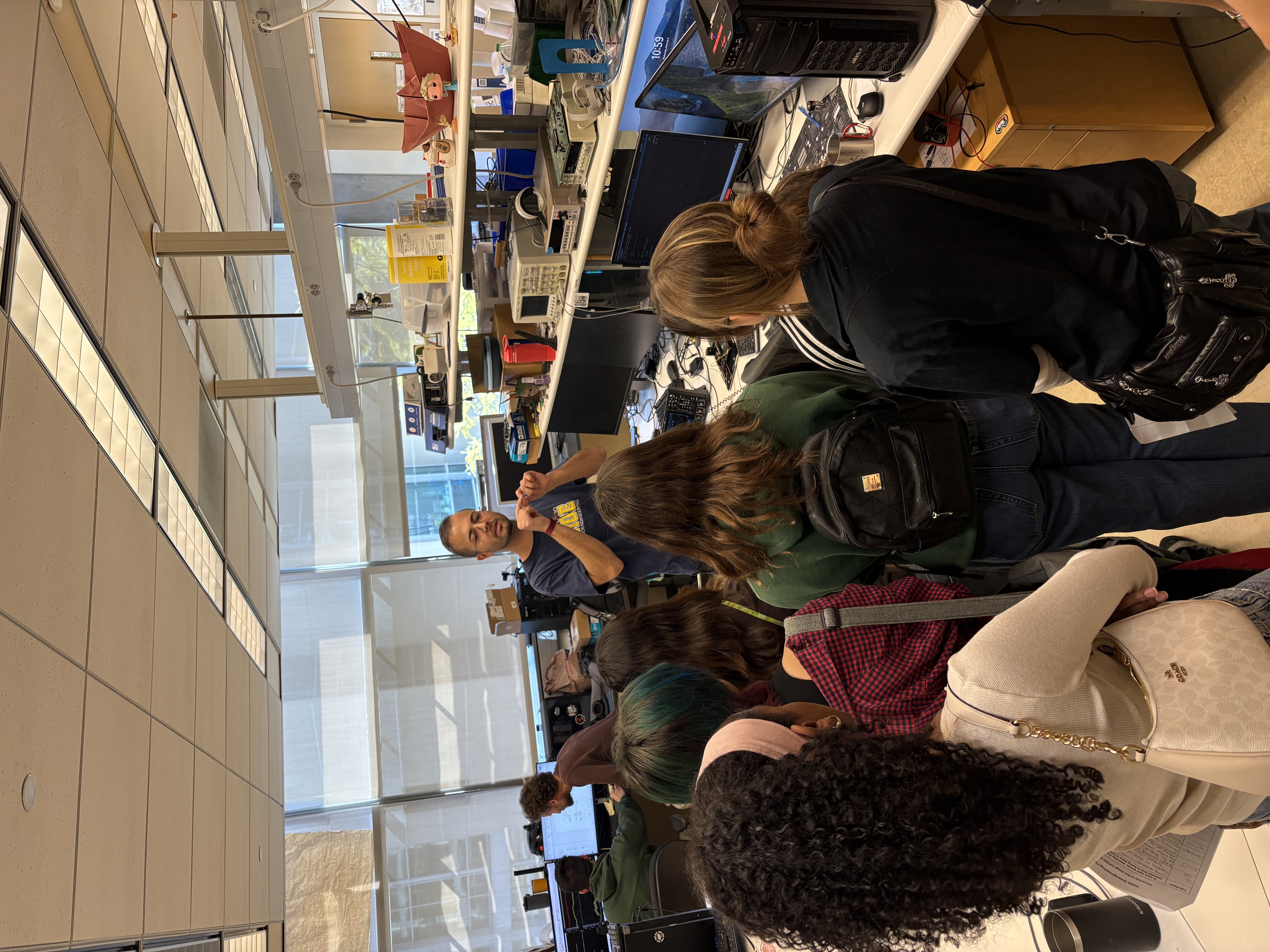
After that, we went to the Cauwenberghs Lab, where Ph.D. student Georgios talked about bioelectronic devices that interface with the body and neuromorphic circuits. The device that got the students most excited was the in-ear EEG, which are basically AirPods that can read brain waves. The capability to diagnose neural conditions with a device as ubiquitous as an AirPod was dwarfed in interest by the dream that one day we can communicate telepathically through our headphones.
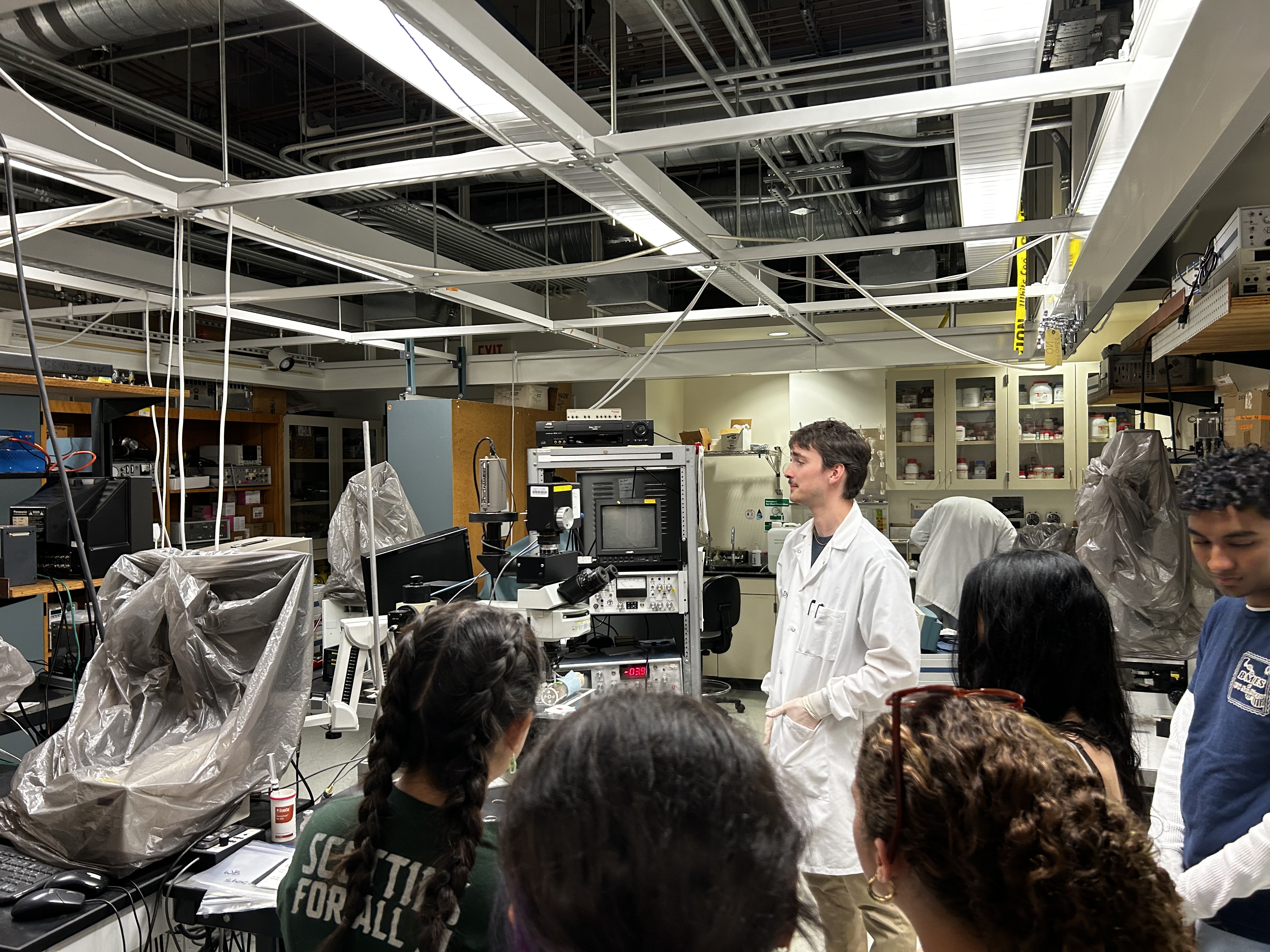
Another rotation later, we were in the Cabrales lab, where Ph.D. student Elliot explained how his research into synthetic blood and elongating the life of stored blood can address blood shortages across the world. One day, we may live in a world where surgical procedures don’t depend on donated blood. Elliot was able to show real data from a previously run experiment where he analyzed the microvasculature of a Golden Hamster.
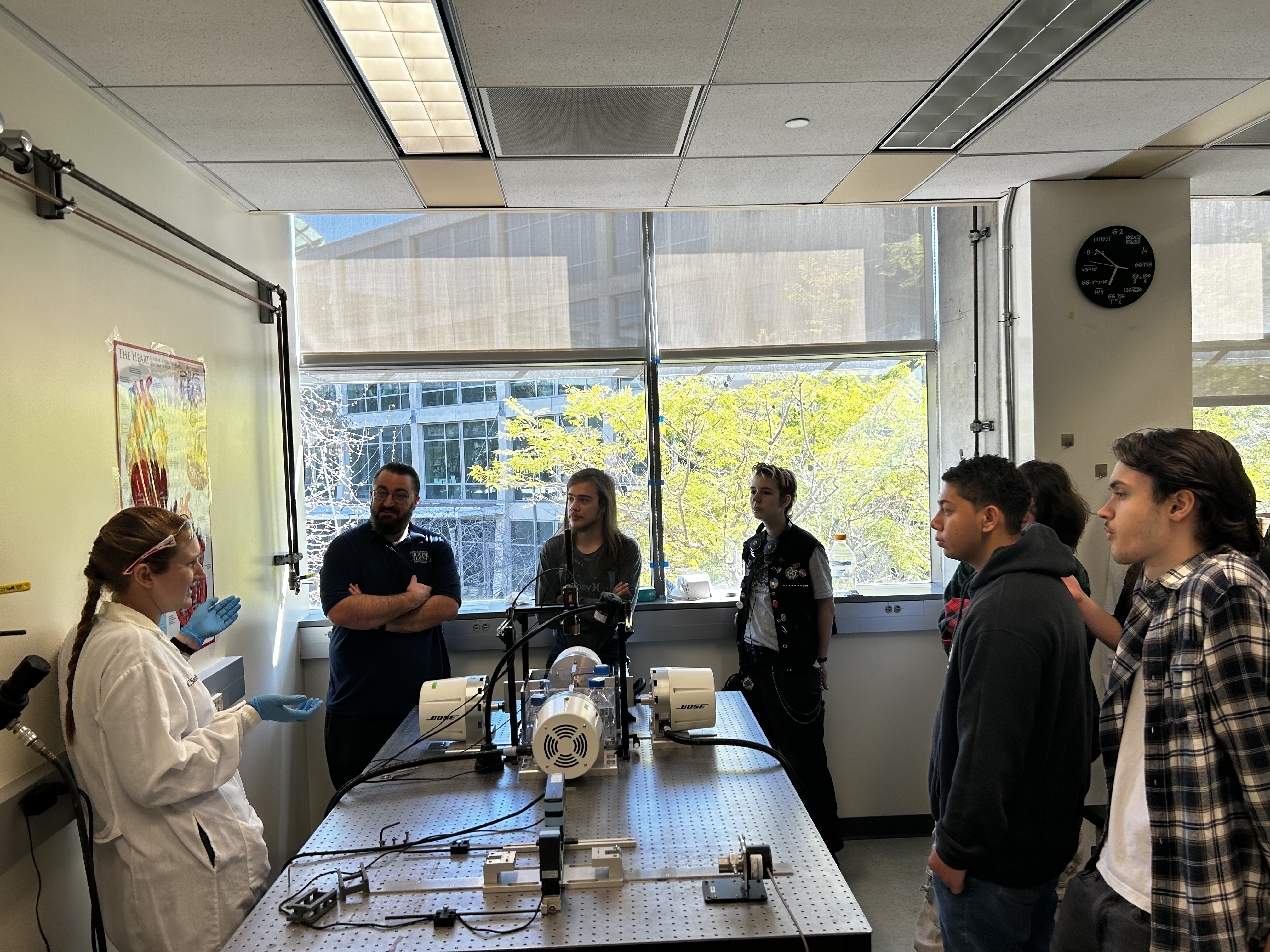
We then gallivanted down the stairs to the DVJ lab, where Ph.D. student Becky was showing their state of the art stress machine, which applies extremely small stresses to mouse heart tissue (not mounted) and measures the strain on the tissue. Stressing heart tissue in certain ways can help the scientists characterize atherosclerosis and find interventions to treat the devastating heart disease.
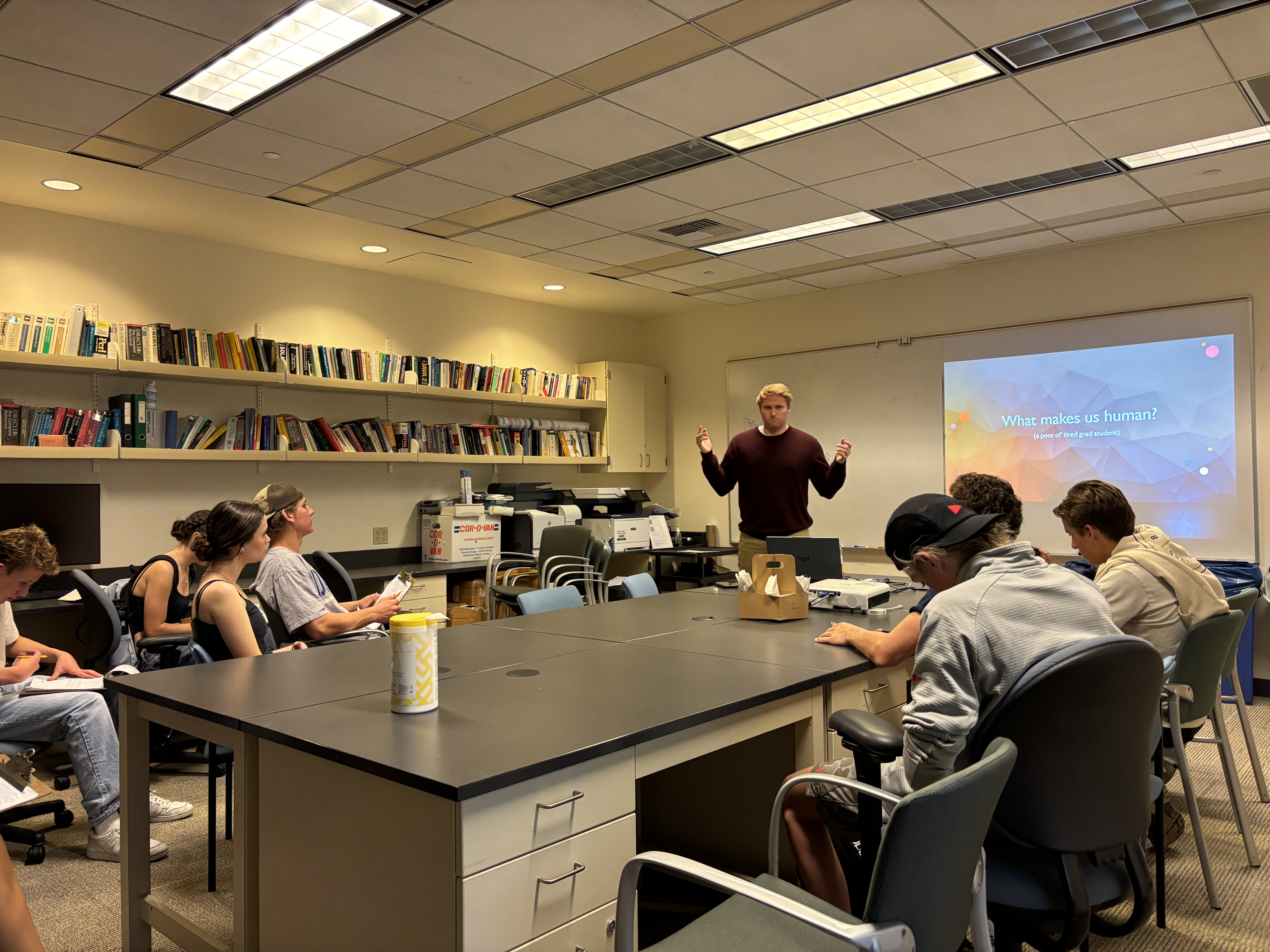
An additional rotation brought me to the Subramaniam Lab, where Ph.D. student Fitz was explaining how he develops balls of brain cells called organoids that model actual brains. They have even gotten EEG readings from these organoids that look very similar to readings from a real neonatal brain! A super cool hands-on part of this rotation was when Fitz passed around a tube full of these brain organoids for the students to see.
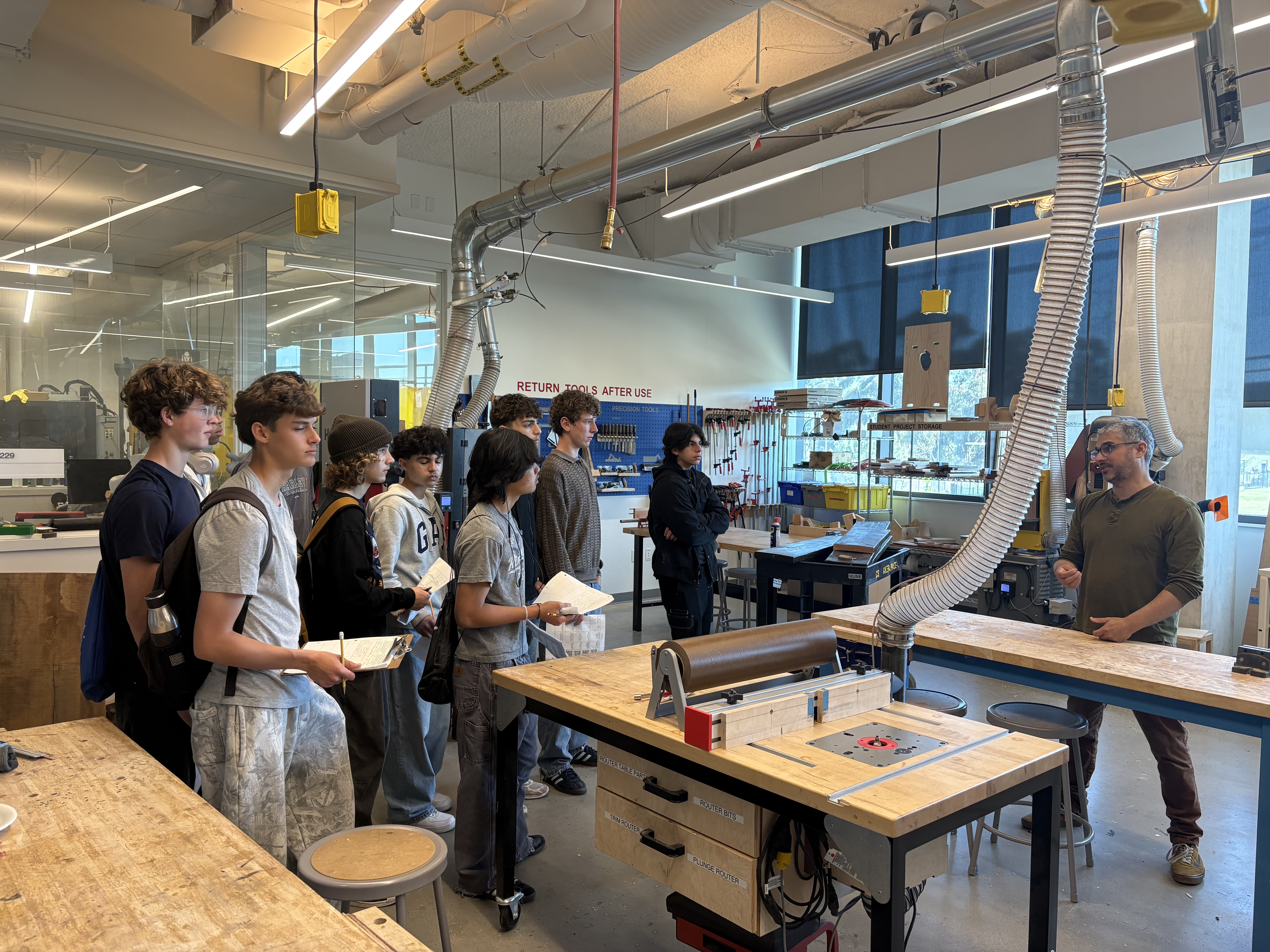
For the students who are more interested in engineering than biology, we took a stroll through the UCSD maker space, where staff member David kindly showcased the 3D printers, laser cutters, milling machines, and many more unique machines in the space that enable students to turn ideas into reality.
We also stopped by the Shih lab which makes laser microscopes, the Sah lab which studies cartilage tissue repair, and Cyphert Lab which studies drug-microbiome interactions, where they explained their exciting research to the students! Unfortunately I didn’t grab any pictures of these labs as I got distracted with all the cool science.
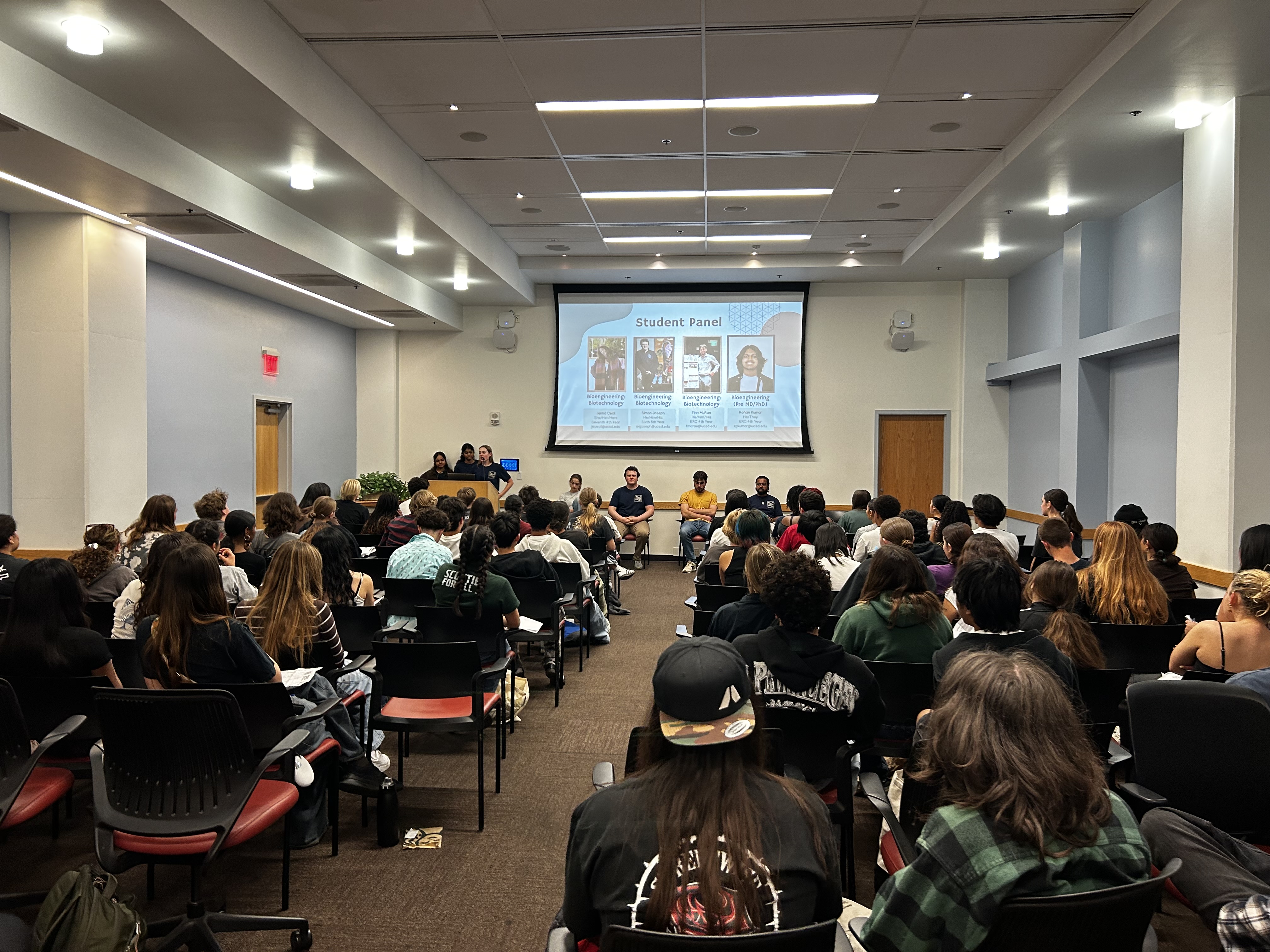
After breaking quickly for lunch, we reassembled and gave a quick presentation on the bioengineering major, the UCSD undergraduate experience, and applying to college. After a Q&A session with current undergraduates, the high schoolers broke up into their groups and each was led on a personalized tour of the UCSD campus. They stopped at points of interest such as the on-campus Target, career center, Sun God Lawn, the Chicano Legacy mural, and of course Geisel Library. Here we concluded the day and surrendered the students back to their teachers to return to school.
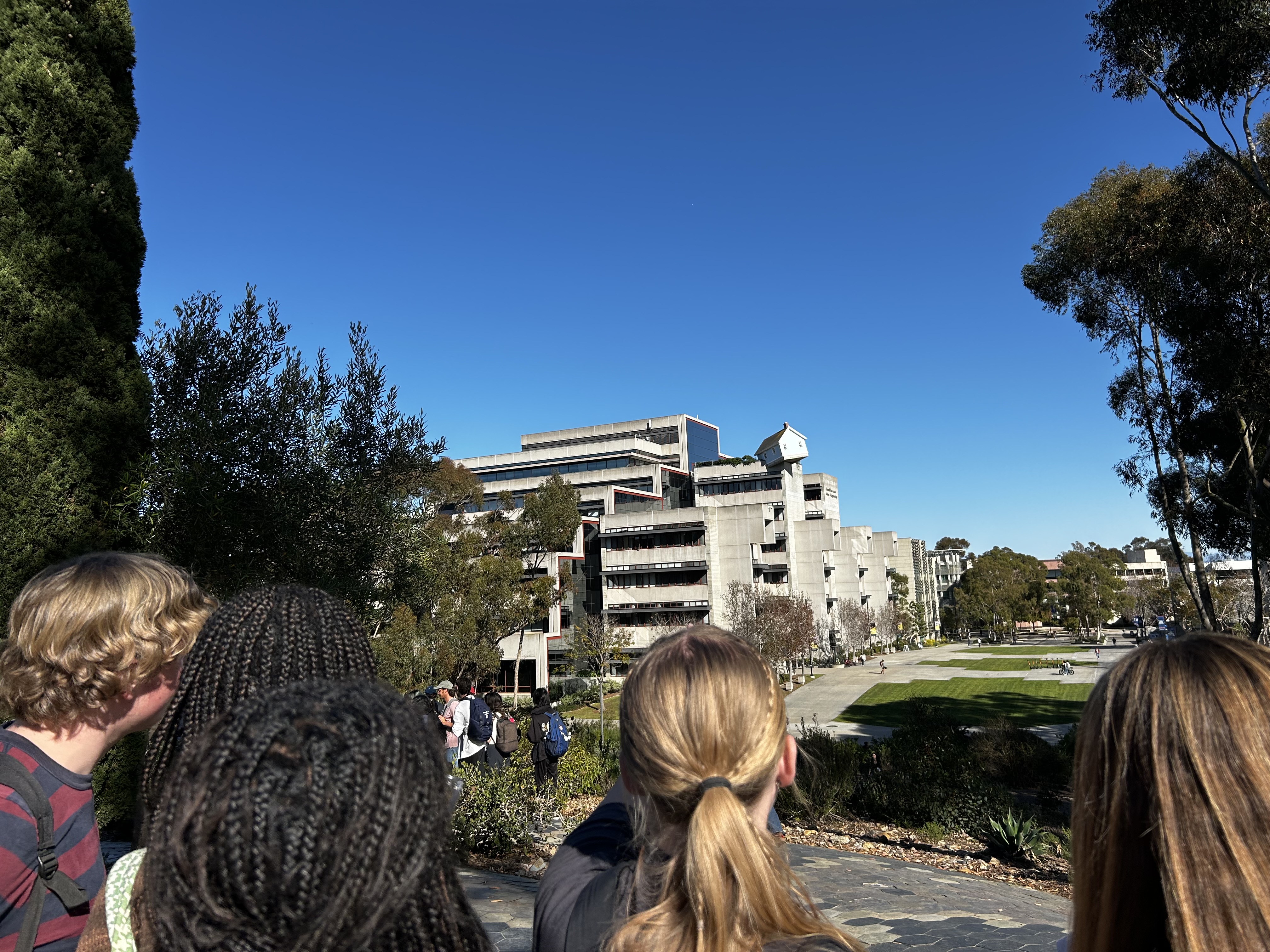
This year was perhaps our most successful Lab Crawl yet, handling more students and collaborating with new and interesting labs to enhance the students' experience. I hope the experience was formative for at least a few burgeoning scientists who are starting to question the world around them and wonder about the potential of biotechnology. There were definitely no IACUC rules broken during this event and I am excited to host it again next year!
A huge thank you to all of the graduate students and PI’s that welcomed us into their workspaces and explained their work to the students. A special thank you to the Cyphert lab who came in on a weekend to create a tailored and engaging experience for the students. Also shout out to UCSD BMES who supplied a lot of the undergrad chaperones and everyone on the student panel.